

Why does a shampoo or soap bar wear out so fast?
It's the question we're asked most often after someone's first shampoo bar: "it melted in three weeks, is that normal?" The answer is no, and the cause is nearly always the same.
An organic solid cosmetic, whether a shampoo or a cold process soap, contains vegetable glycerine produced naturally during saponification. That's what makes our soaps so gentle on skin, but it also has a property worth knowing about: it is hygroscopic, meaning it attracts and holds moisture from the air around it.
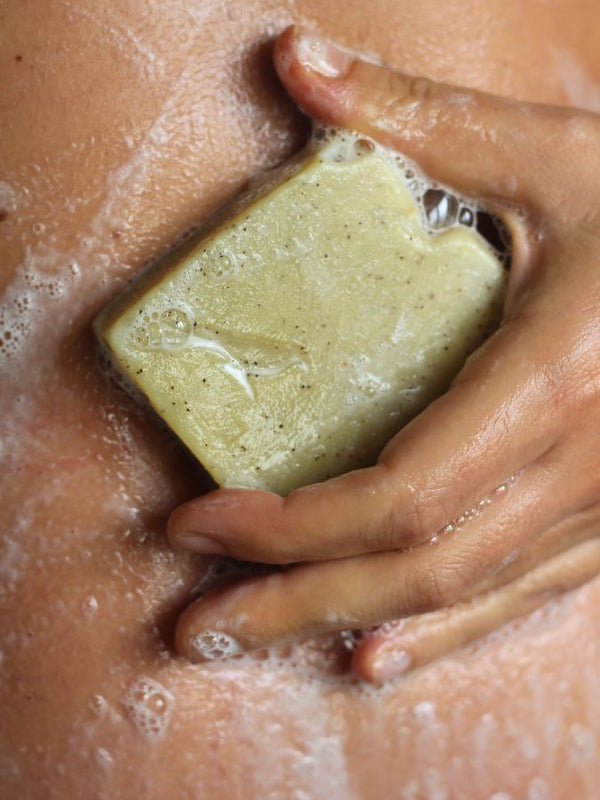
The result: laid flat on the edge of the shower, in water that never drains away, the bar absorbs water continuously. It softens, turns spongy, then cracks as it dries badly. It isn't the product that's fragile: it's the standing water that ruins it.
How long does a shampoo bar last?
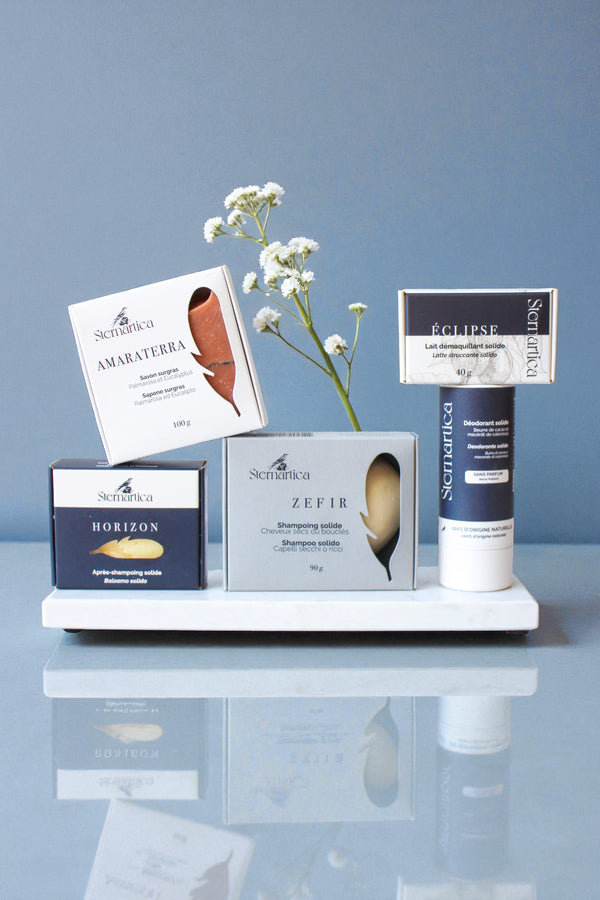
Our shampoo bars weigh 90 g and give you up to 60 washes. But that figure assumes one simple condition: that the bar never sits soaking in water between uses.
A bar left wet every time, in a dish where water collects, wears out noticeably faster, and you'll never reach those 60 washes. That's the whole difference between a product that lasts months and one that disappears in a few weeks.
If you haven't chosen your bar yet, our guide on how to choose the best shampoo bar goes through the criteria that really matter, and what the reviews don't tell you.
How to store a shampoo bar properly between showers
A few simple habits are enough to make your solid cosmetics last far longer:
- Take the bar out of the shower right after use, never leave it in the bottom of the tray
- Shake it lightly to get rid of the surface water
- Set it on a holder that lets air circulate underneath and around the bar
- Avoid closed or silicone dishes : they hold the water in instead of letting it drain
- Let it air dry between showers, never shut away while damp
- Only put it in a box once it is completely dry
Which holder should you choose for drying a solid cosmetic?
Not all soap holders are equal, and the difference shows up quickly in how long the bar lasts: