
Oily hair comes from the sebaceous glands in the scalp overproducing sebum. Harsh surfactants like SLS strip the scalp of its protective lipids, which can upset the sebum balance and keep the cycle going. Moroccan ghassoul clay absorbs excess sebum through ion exchange without stressing the scalp, an alternative documented by a study published in the International Journal of Cosmetic Science in 2009.
Your hair is greasy again within 24 hours. You wash it almost every day. And yet nothing really improves , and some mornings it even looks worse than before.
Sebum isn't your enemy. It's your shampoo that may deserve a second look.
Why does the scalp produce too much sebum?
Sebum is produced by the sebaceous glands in the scalp. It's a natural, protective substance : it lubricates the hair fibre, maintains the hydrolipidic film and protects against external stress.
Overproduction of sebum (seborrhoea) can have several causes: genetics, hormones, diet, stress , or a reaction to a product so harsh that it strips the scalp and triggers a protective overproduction.
That last mechanism is at the heart of the problem for a lot of people with oily hair: the shampoo takes away too much, the scalp reacts, and the hair is greasy again very quickly.

Why do harsh surfactants keep oily hair oily?
Conventional shampoos for oily hair often contain powerful surfactants , SLS (Sodium Lauryl Sulfate) or SLES (Sodium Laureth Sulfate), which clean deeply but also strip the scalp's natural lipids.
The result: the scalp, stripped of its protective film, can react by producing more sebum to defend itself. The shampoo cleaned too much, the scalp compensates. The hair is greasy again within 24 to 48 hours, and the cycle starts over.
It's no accident that so many people with oily hair end up trapped in a routine of daily washing without ever really improving the situation.

What is ghassoul, and why does it regulate sebum differently?
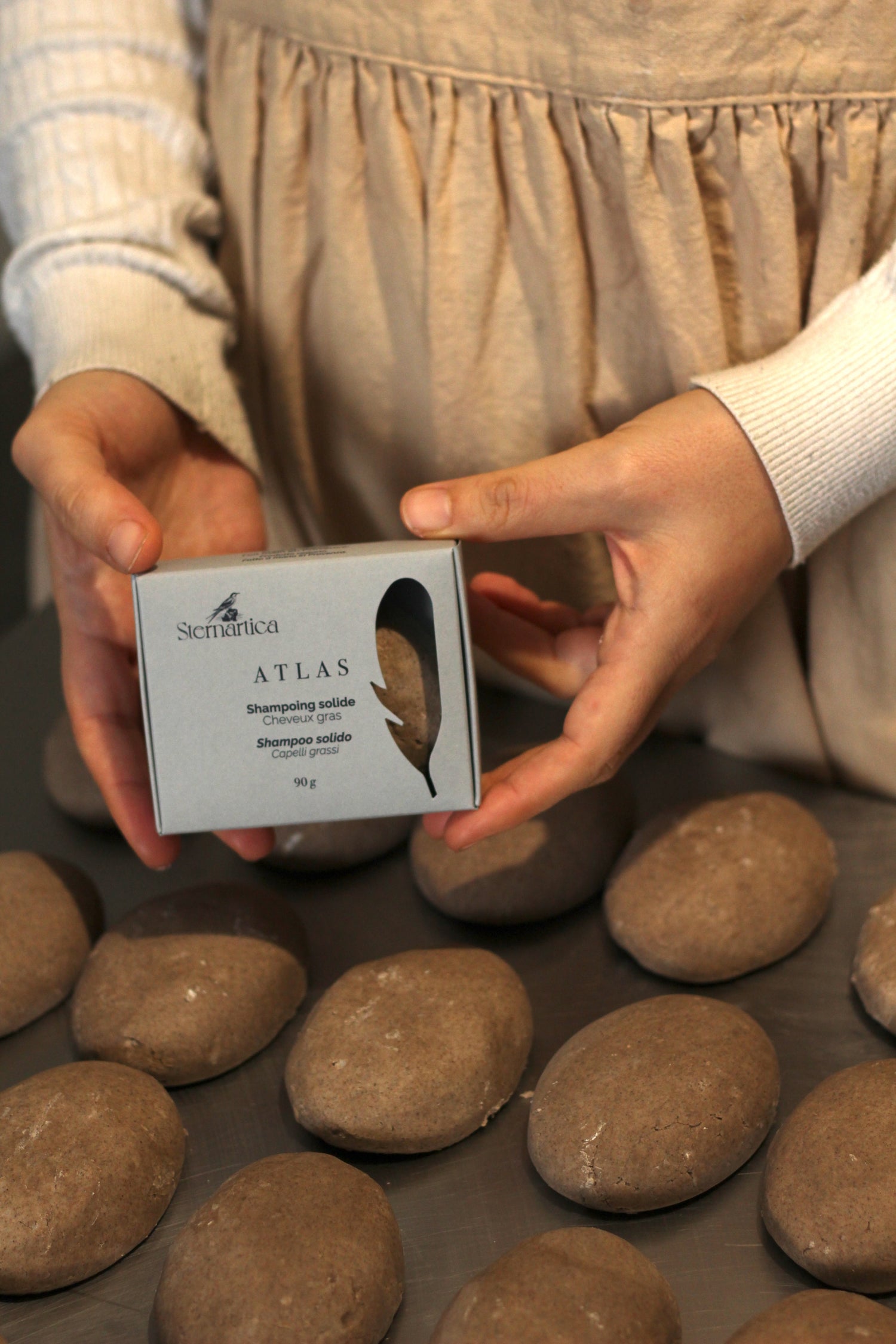
Ghassoul (or rhassoul) is a mineral clay mined in the High Atlas mountains of Morocco.
Its composition is remarkable: silica (~58%), magnesium (~25%), calcium, potassium and iron. That mineral richness is what gives it its unique absorbing properties.
It works through ion exchange: ghassoul particles carry a natural negative charge. Impurities, excess sebum and product residue carry a positive charge. Ghassoul attracts and adsorbs those positively charged molecules, so it absorbs excess sebum right at the surface of the scalp without stripping away the essential lipids.
A study published in theInternational Journal of Cosmetic Science in 2009 showed that applying rhassoul significantly improved scalp texture, reduced flaking and improved skin clarity, outperforming conventional soap on all four criteria assessed.
How to wash less often with the right shampoo
Contrary to popular belief, washing your hair often isn't in itself the cause of oily hair. A study published in PMC (The Impact of Shampoo Wash Frequency on Scalp and Hair Conditions, 2021) showed that daily washing does not lead to compensatory sebum overproduction.
What matters is how you wash , not how often.
With a shampoo bar formulated for oily hair:
-
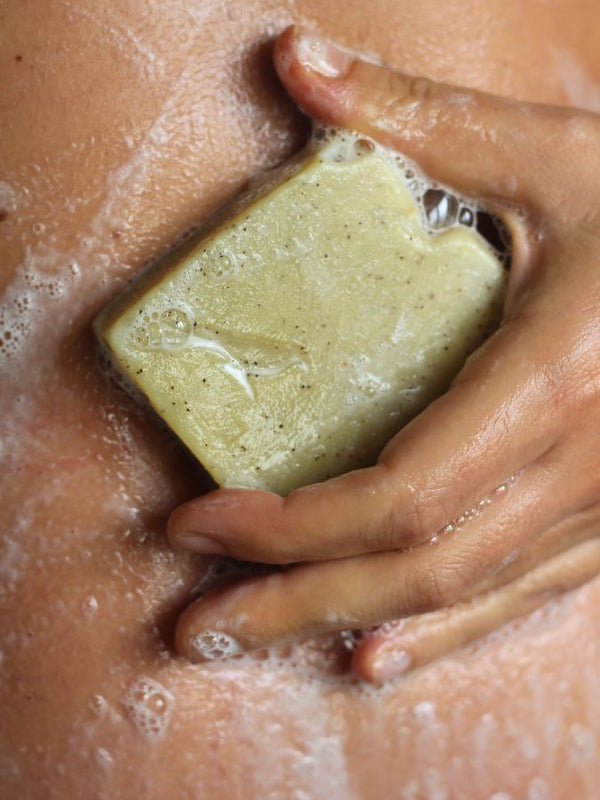
✓Massage the scalp for 2 minutes, so the ghassoul can get to work
-
✓Rinse thoroughly with lukewarm water, then cold to close the pores
-
✓Don't work it through the lengths , apply the shampoo to the scalp only
-
✓Keep the bar out of the water between uses so the actives stay intact, on a holder that lets the water run off