Skip to content

Free shipping over €40

A gift in every order

Handmade in our workshop in Drôme Provençale, France

Waxy hair from a shampoo bar: soap or real shampoo?
Shampoo & Ingredients

Waxy hair after a shampoo bar? Here's the real cause

Woman with waxy hair after using a badly formulated shampoo bar
✦ The essentials in 40 seconds

If your shampoo bar leaves your hair waxy, heavy or coated, the cause is almost always the same: it isn't a real shampoo bar, it's saponified soap. The two look alike, but their chemistry is completely different. A real organic shampoo bar built on gentle surfactants (SCI) leaves no residue and needs no adjustment period.

You tried a shampoo bar and your hair came out waxy, heavy, or with a coated feel that wouldn't rinse away. You concluded that shampoo bars "just aren't for you".

Before you give up, look at the label on your product. There's a good chance that what you used wasn't a shampoo bar at all, but soap.

Why does hair turn waxy with some shampoo bars?

That heavy, waxy, "not really washed" feeling after a shampoo bar has a precise chemical cause : calcium soap forming.

When the fatty acids in a saponified soap (pH 9 to 10) meet the calcium and magnesium ions in hard water, they form calcium stearate, an insoluble residue that settles on the hair fibre and resists rinsing.

It's that deposit, not any kind of "transition period", that creates the waxy, coated texture.

Hair and scalp have a natural pH between 4.5 and 5.5. An alkaline soap at pH 9 to 10 opens the hair cuticle at every wash, which makes the residue build up even more and leaves hair dull and hard to style.

None of this has anything to do with the solid format itself. It comes from the chemical nature of saponified soap, and it disappears completely as soon as you use a properly formulated product.

Woman comparing a soap bar and a real shampoo bar

Soap or shampoo bar? It's all in the INCI list

The difference is simple once you know where to look: the first two ingredients on the INCI list.

If the INCI starts with SODIUM OLIVATE, SODIUM COCOATE, SODIUM PALMATE… → it's soap. Those names mean saponified vegetable oils: olive, coconut, palm. They are soap bars, excellent for body and face, but unsuited to hair for regular use, especially with hard water.

Many brands sell them as "shampoo bars", which is misleading.

If the INCI starts with SODIUM COCOYL ISETHIONATE… → it's a real shampoo bar. Sodium Cocoyl Isethionate (SCI) is a gentle surfactant derived from coconut. Its pH is close to that of hair (between 5 and 6). It cleans effectively without opening the cuticle, without leaving residue, and without your scalp needing to rebalance.

That's the first thing to look for on a label, but it isn't the only one. Our guide to choosing the best solid shampoo gathers the four points worth checking before you buy.

A table to keep things straight:
INCI (first ingredients) Type of product Effect on hair
SODIUM OLIVATE, SODIUM COCOATE Saponified soap Can leave a waxy residue, especially in hard water
SODIUM COCOYL ISETHIONATE (SCI) Shampoo bar Cleans gently, no residue
SODIUM LAURYL SULFATE (SLS) Solid or liquid shampoo Cleans too much, dries out the scalp

Surfactants in shampoo: what you need to know

The harsh surfactants to avoid

Sodium Lauryl Sulfate (SLS) and Sodium Laureth Sulfate (SLES) are the most common surfactants in conventional shampoo. They lather a lot and clean fast, but they clean too much.

Branco et al. (Contact Dermatitis, 2005) showed that repeated exposure to SLS causes measurable skin irritation: redness, dryness and increased transepidermal water loss. Monselise et al. (International Journal of Women's Dermatology, 2015) note that SLS is "more irritating and damaging to the follicle" compared with the gentler surfactants available today.

In response to that repeated stress, the scalp compensates by producing more sebum , which creates the familiar vicious circle: hair that gets greasy quickly, frequent washing, an unbalanced scalp.

At Sternartica, our shampoo bars contain neither SLS nor SLES.

The gentle surfactant that changes everything: SCI

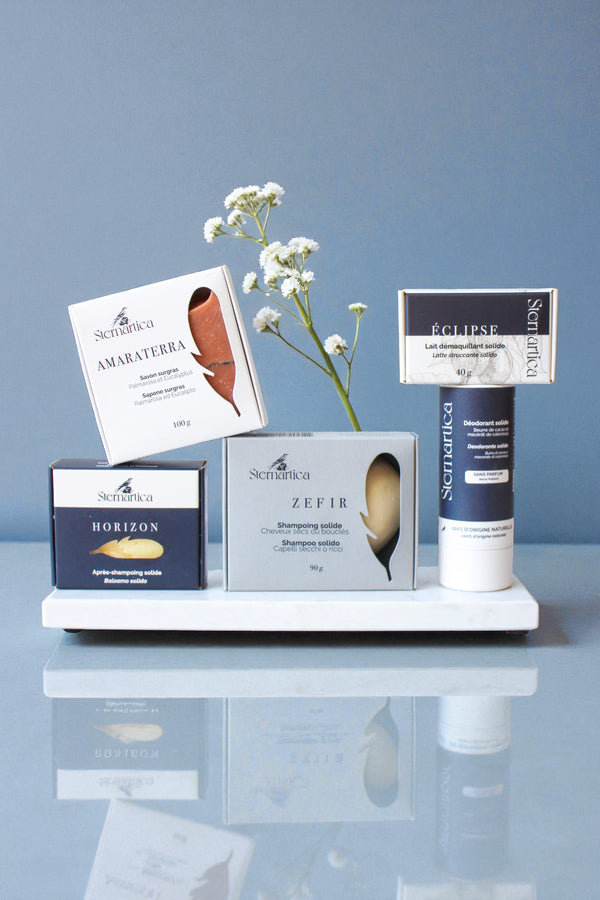
All three of our shampoo bars are built on Sodium Cocoyl Isethionate, a Cosmos certified surfactant derived from coconut. It cleans thoroughly, lathers well, respects the natural pH of hair, and needs no adjustment period at all.

The next step is picking the formula that suits your hair. That is exactly what our guide to the best solid shampoo and how to choose it covers, beyond what online reviews say.

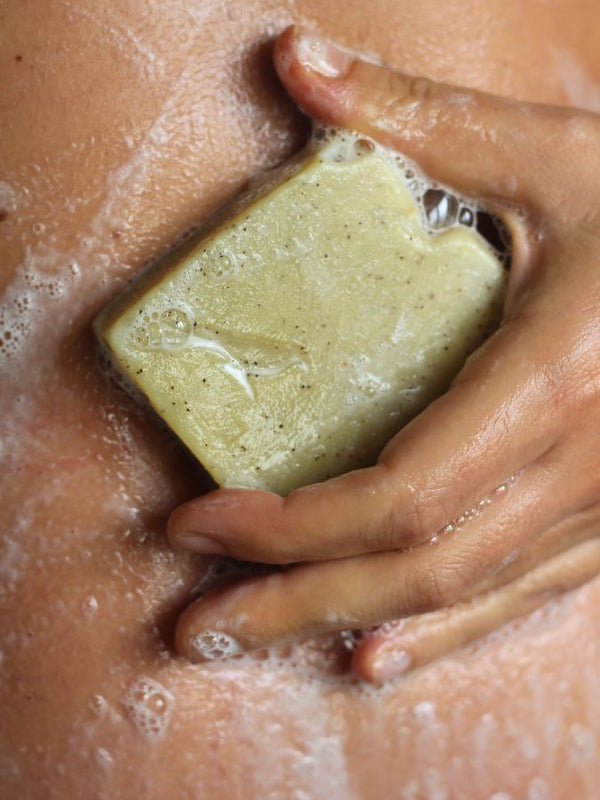
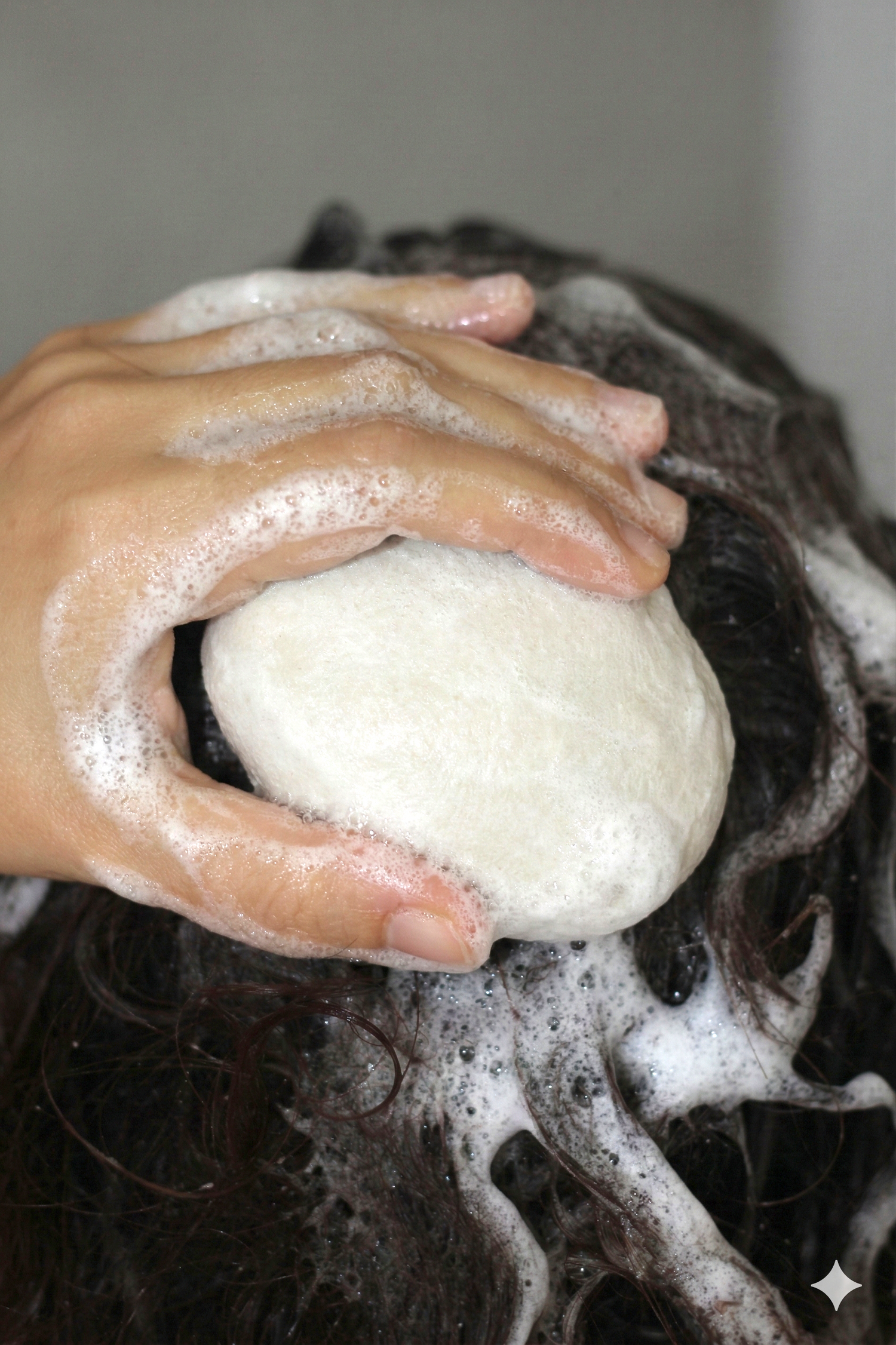
Lather from a real Sternartica shampoo bar made with SCI
No adjustment period

A real organic shampoo bar needs no transition

This is one of the most widespread misunderstandings about solid cosmetics. The "transition period" so many blogs talk about does exist, but it applies to saponified soap used as shampoo, not to real shampoo bars made with gentle surfactants.

With an organic shampoo bar built on SCI like ours, your hair is clean, light and easy to style from the very first wash.

No weeks of adjustment. No waxy feeling.

How to use an organic shampoo bar properly

Even without an adjustment period, a few simple habits make the difference:

  1. Wet your hair thoroughly before applying the product
  2. Rub the bar between your palms to work up a lather, then apply it to the scalp
  3. Massage with your fingertips for 1 to 2 minutes
  4. Rinse for a long time with lukewarm water, this is the most important step
  5. Finish with a cold rinse to close the cuticle and add shine
  6. Keep the bar out of the water between washes so it lasts longer
Why choose Sternartica?

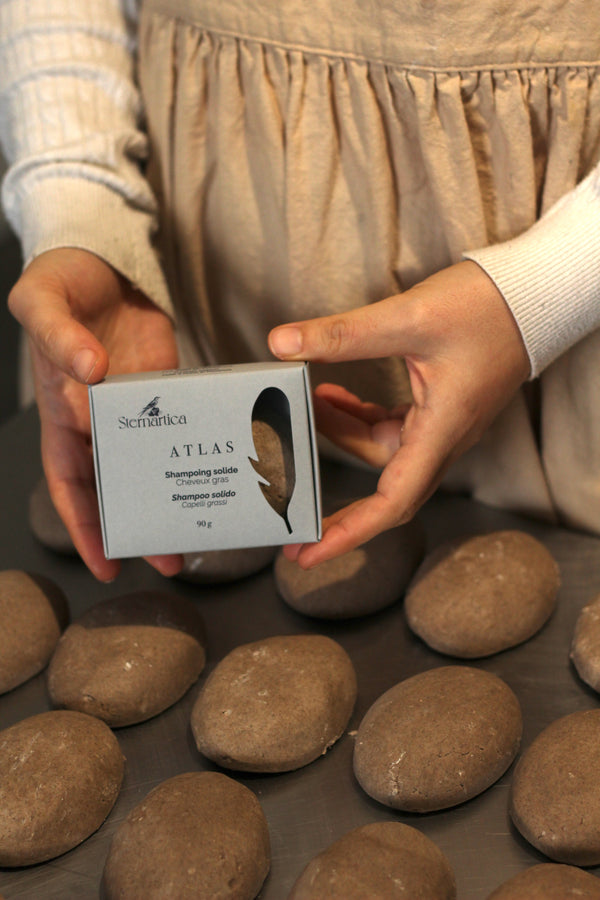
My name is Federica, and I make every shampoo bar by hand in my workshop in Drôme Provençale. Since 2021 I have formulated my shampoo bars with Cosmos certified gentle surfactants: no SLS, no SLES, no silicones, no saponified soap.

In 2022, Sternartica received the GECO EXPO award for its environmental commitment.

"My hair is incredibly soft, shiny, light... and it lathers beautifully."

Three formulas, none of them needing an adjustment period:

They say it better than we do

★★★★★
4.97 / 5 from 135 verified Judge.me reviews
★★★★★

"I love this spirulina shampoo bar. Since I started using it my hair is softer and less dull."

Isabelle M. — NEPTUNE shampoo bar
★★★★★

"Great product, I've been using it for over a year now."

FRANCK S. — ZEFIR shampoo bar
★★★★★

"Great products, I love the scents and how easy they are to use. The shampoo and conditioner are just perfect."

Bénédicte K. — Complete Routine kit

Frequently asked questions

Everything people ask us about waxy hair and real shampoo bars

In the vast majority of cases, the product used is saponified soap sold as shampoo. In hard water the fatty acids in soap form calcium stearate, an insoluble residue that settles on the hair. The fix: check the INCI list. If the first ingredients are SODIUM OLIVATE or SODIUM COCOATE, it's soap, not shampoo.
No. A properly formulated shampoo bar built on Sodium Cocoyl Isethionate (SCI) needs no adjustment period. Hair is clean and light from the first wash.
Look at the first ingredients on the INCI list. A real shampoo bar starts with SODIUM COCOYL ISETHIONATE. Soap starts with SODIUM OLIVATE, SODIUM COCOATE or SODIUM PALMATE.
Yes, if you're using saponified soap. The harder the water, the more calcium stearate builds up. With a real SCI-based shampoo bar, hard water has almost no effect on the result.
Check how you rinse, that's the most common cause. Rinse for longer than you think you need to, and finish with cold water. If the problem persists, a weekly vinegar rinse (1 tablespoon of cider vinegar in 500 ml of water) helps remove any remaining limescale residue.
Shampoo bars Discover
Organic solid cosmetics & handmade candles, made by hand in Drôme Provençale.