
-
Regular price €9,90 EURRegular price
-
Regular price €9,90 EURRegular price
-
Regular price €9,90 EURRegular price
-
Regular price €9,90 EURRegular price
-
Regular price €9,90 EURRegular price
Cold-process, or industrial?
A cold-process soap can be told from its INCI list. Cold saponification never heats the oils, and the glycerin produced by the reaction stays in the bar: a natural humectant that holds water on the skin. Industry, by contrast, removes it to sell separately, and replaces it with synthetic chelators.
Two signals on the INCI list:
Tetrasodium EDTA · Etidronic Acid · no glycerin
Glycerin · no synthetic chelator
All five of our soaps are cold-process and superfatted: part of the organic oils is never turned into soap and stays free in the bar, to nourish the skin rather than strip it. Each bar then cures for four to eight weeks before it ships.
Which soap for your skin?
A cold-process soap is not a universal product. Five soaps, five skin profiles: each answers a question you've already asked yourself in the mirror. If you're torn between two, write to me.
“My skin shines by midday”
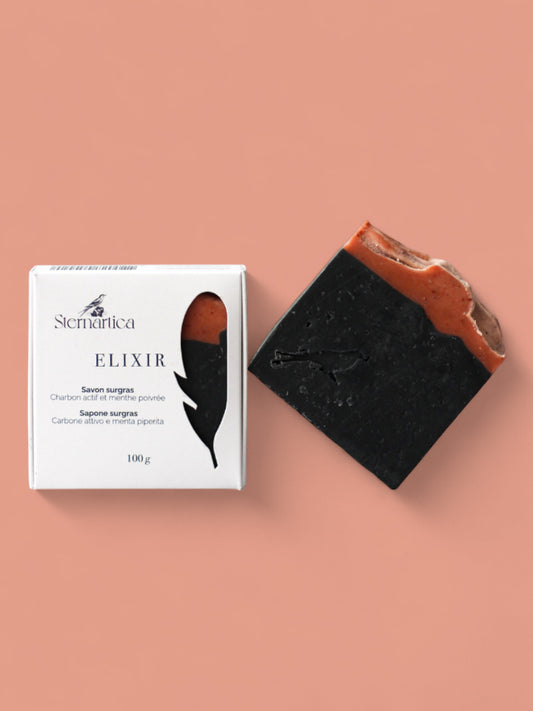
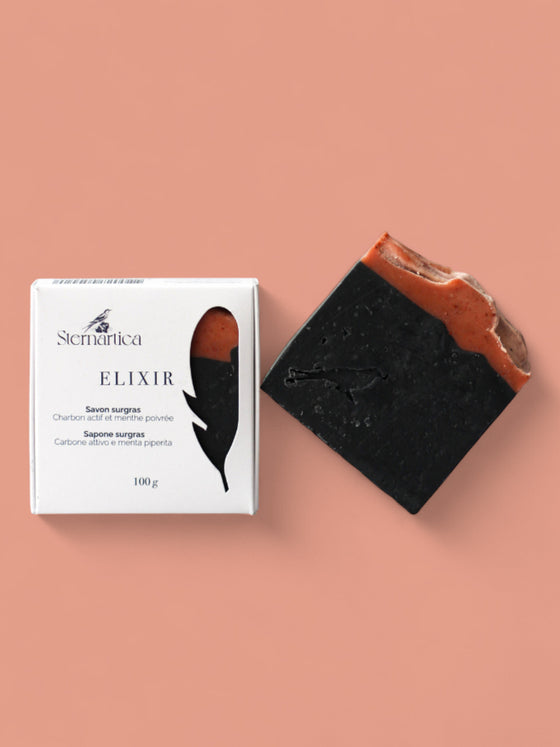
Elixir
Activated charcoal and peppermint: regulates sebum and clears pores, with immediate freshness. For oily skin and blackheads.
Discover →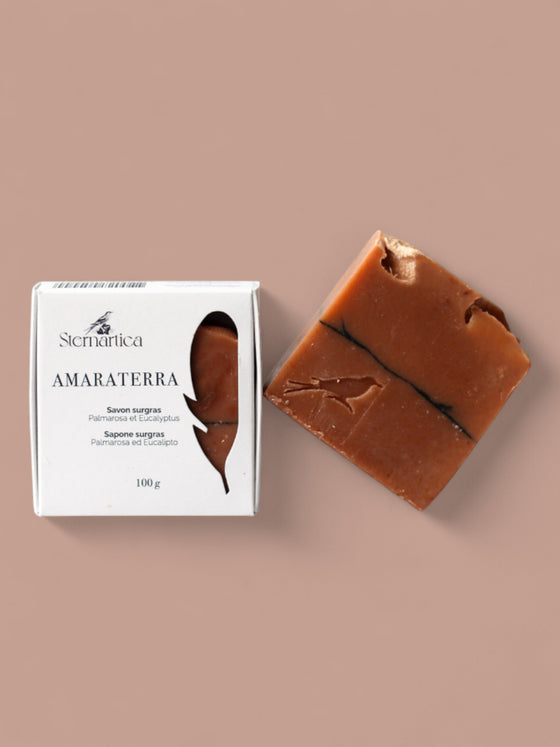
“My T-zone is oily, my cheeks feel tight”
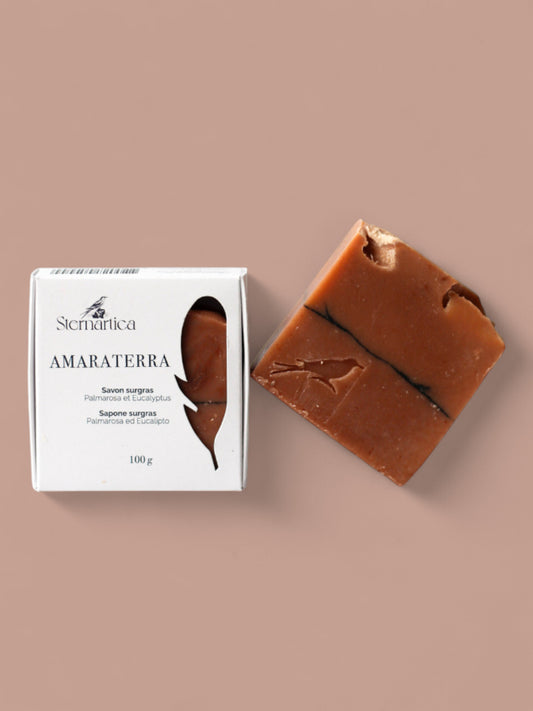
Amaraterra
Double clay and palmarosa: purifies while rebalancing, without drying. For combination skin with the odd blemish.
Discover →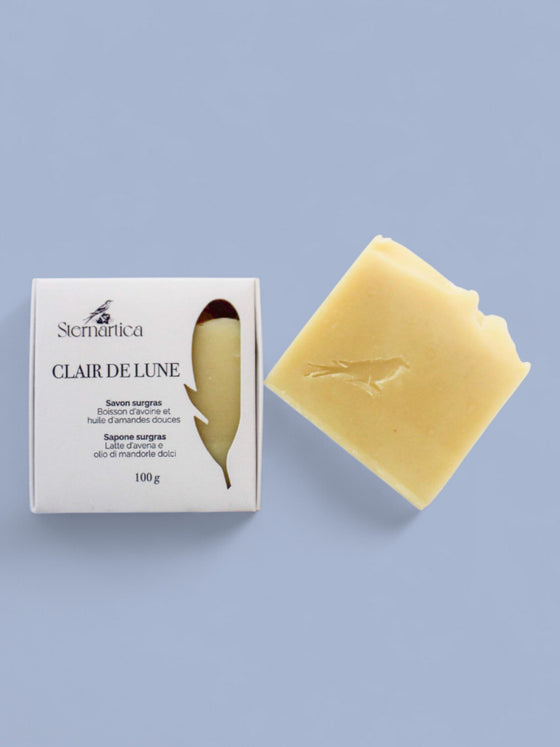
“My skin reacts to everything”
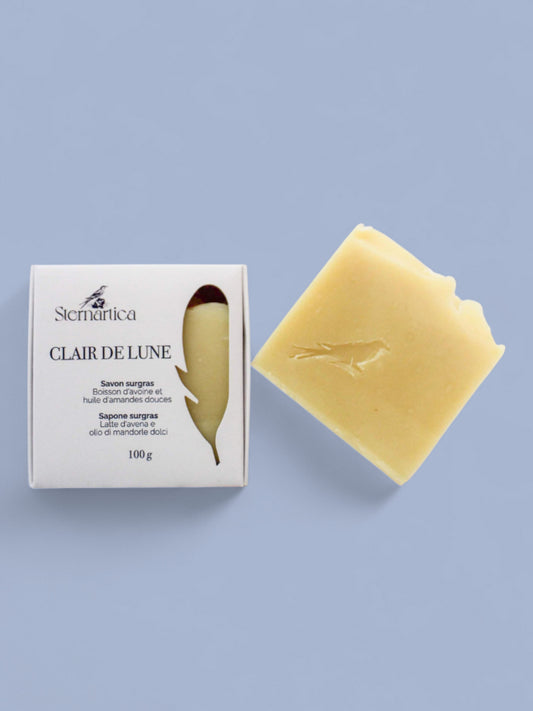
Clair de Lune
No fragrance, no essential oils, no allergens. Usable from birth, in pregnancy and on atopic skin.
Discover →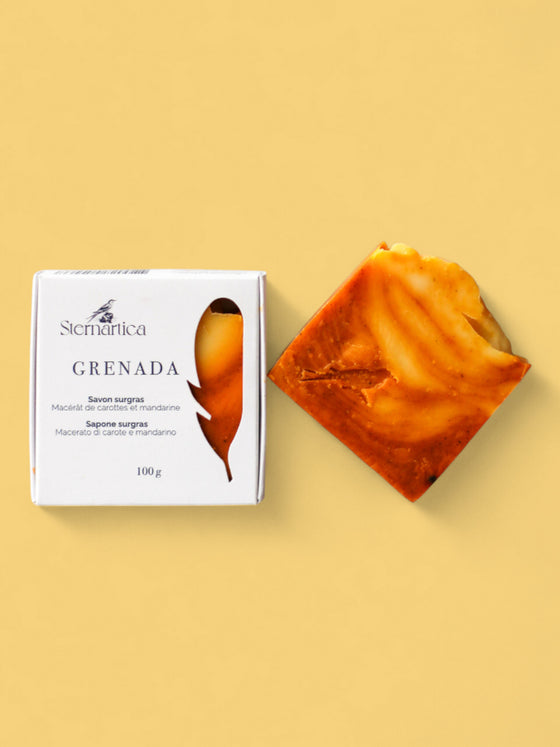
“My complexion is dull and my skin feels tight”
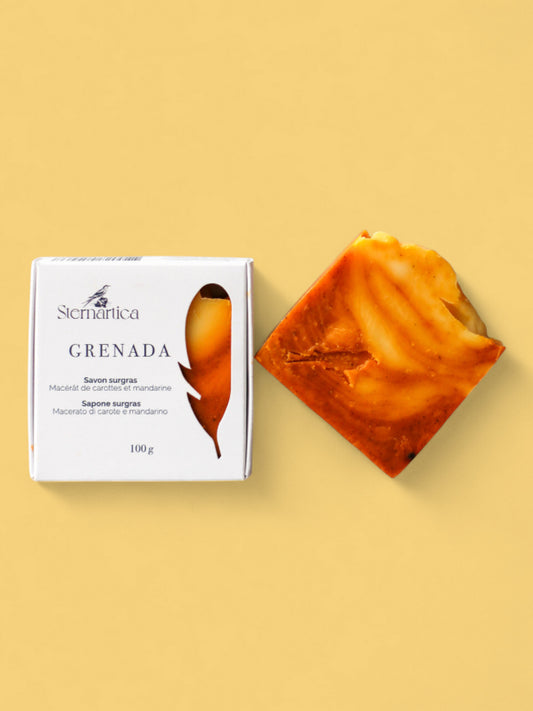
Grenada
Carrot macerate and nourishing oils: revives the complexion and feeds dry skin. The good-mood soap, especially at winter's end.
Discover →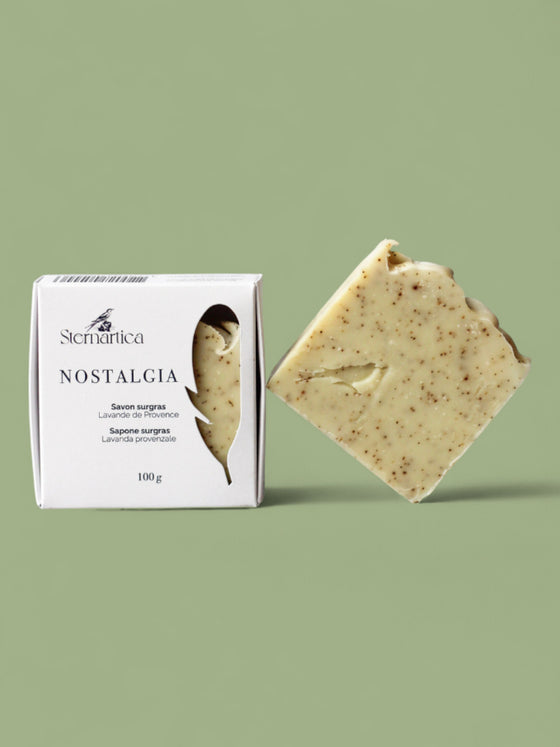
“I'd like smoother skin, now and then”
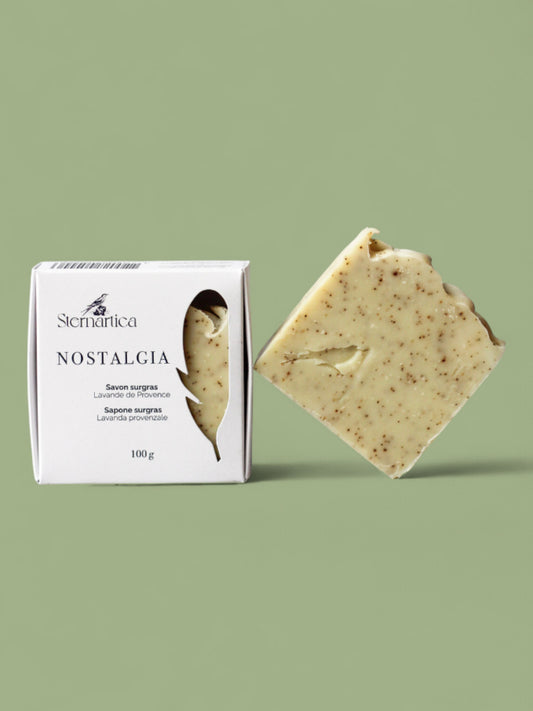
Nostalgia
Organic grape seeds: gently exfoliates and brightens, once or twice a week, alongside your everyday soap.
Discover →What sets the five soaps apart
Same cold-process superfatted base, five different actives. Here is the picture, soap by soap.
| Soap | For which skin | Key active | Scent |
|---|---|---|---|
| Elixir | Oily, enlarged pores | Activated charcoal | Peppermint |
| Amaraterra | Combination, blemishes | Double clay | Palmarosa, eucalyptus |
| Clair de Lune | Sensitive, babies | Shea butter | None, fragrance-free |
| Grenada | Dull, dry | Carrot macerate | Citrus |
| Nostalgia | All, for exfoliation | Grape seeds | Soft, fruity |
All superfatted, all with the natural glycerin of cold saponification, all wrapped in plastic-free cardboard. A bar of around 100 g lasts on average four to six weeks with daily use.
How to use it, and make it last
A cold-process soap doesn't ask for much. But one extra gesture, after the shower, doubles how long it lasts.
- Wet your skin and the bar with warm water.
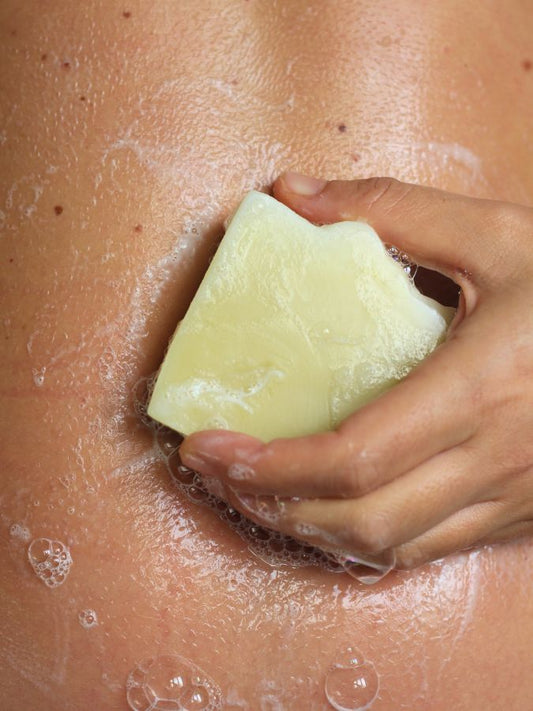
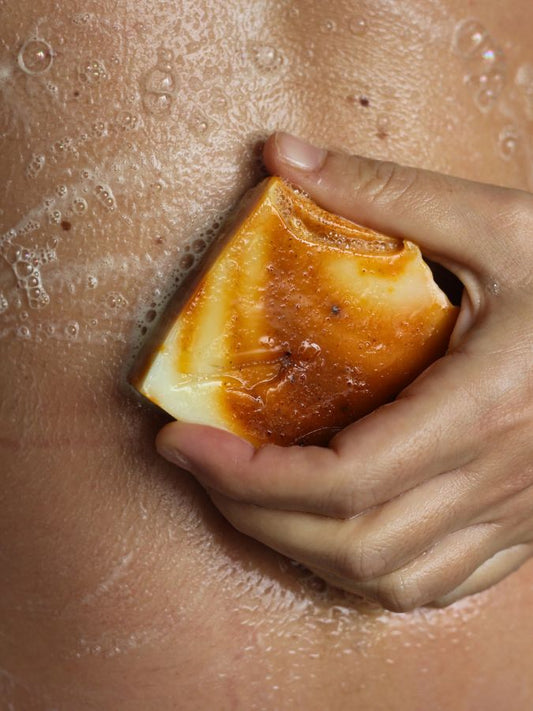
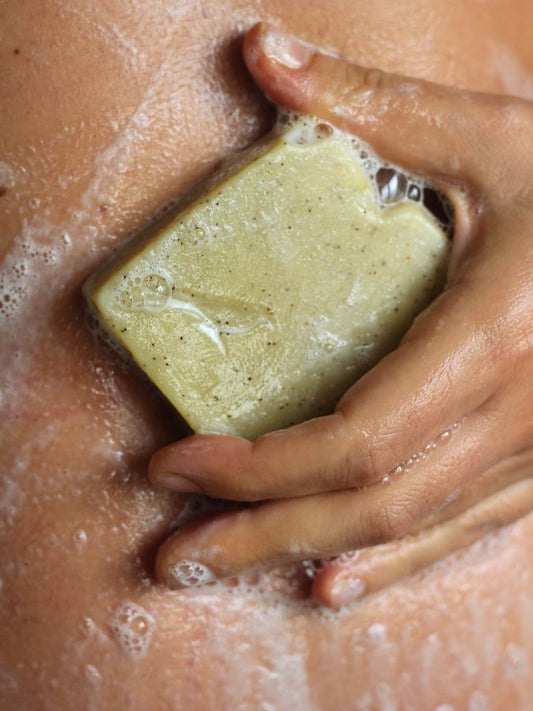
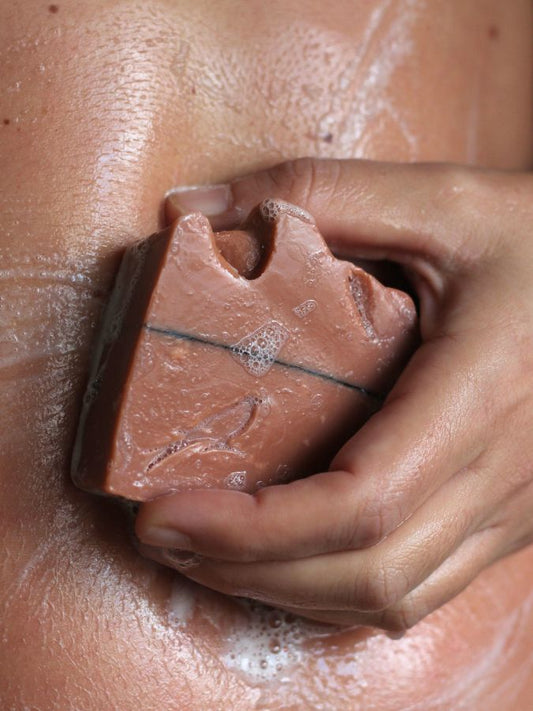
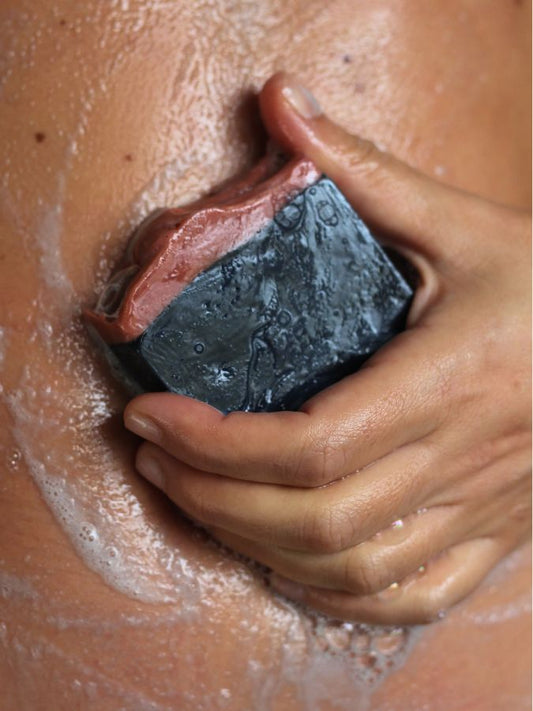
- Lather between your hands or directly on the skin, in circular motions.
- Rinse and enjoy the clean-skin feel, with no tightness.
- Let it dry on a draining soap dish, away from the stream: this is what decides how long it lasts.
Unlike a solid shampoo, a soap does very well on a magnetic soap holder: suspended in the air, it dries fully between uses and never softens in a puddle.
“Soap dries the skin” — it depends on the soap.
True for industrial soaps, stripped of their glycerin: the skin already feels tight out of the shower and needs a cream to compensate. A cold-process, superfatted soap does the opposite. The natural glycerin stays in the bar, the unsaponified organic oils nourish, and the skin stays soft with nothing to add. If a soap once dried out your skin, it wasn't the wrong skin: it was the soap.

Every soap is poured by hand, cold.
I weigh the oils, add the lye at room temperature, colour with clays and vegetable charcoal, then pour into the mould and cut every bar by hand, in my workshop in Drôme Provençale. Then the wait begins: four to eight weeks of cure, so the reaction completes and the soap turns mild. It's slow, and that is exactly what makes the difference in the shower.

Federica
Founder & formulator
I pour every soap by hand in my workshop in Drôme Provençale, in small batches. If you're torn between two, write to me: I answer myself, and I'd rather tell you “take the other one” than sell you the wrong bar.
Frequently asked questions
The real ones, the questions people email me.