
-
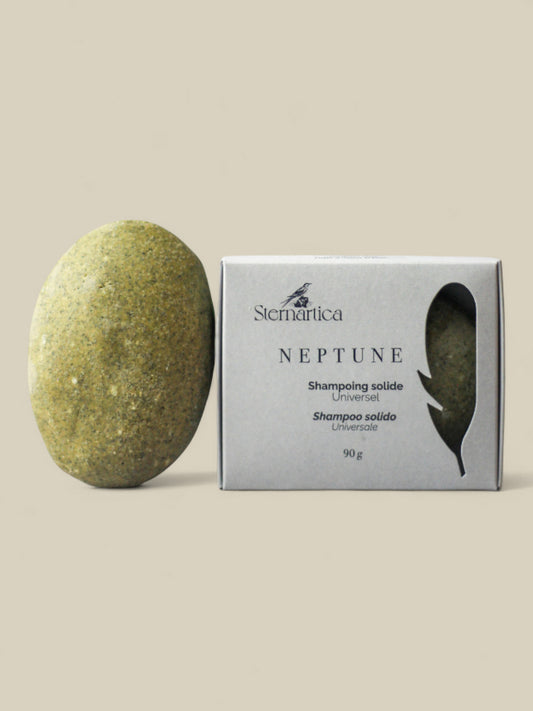
Solid shampoo with spirulina for all hair types | Neptune
Regular price €14,90 EURRegular price -
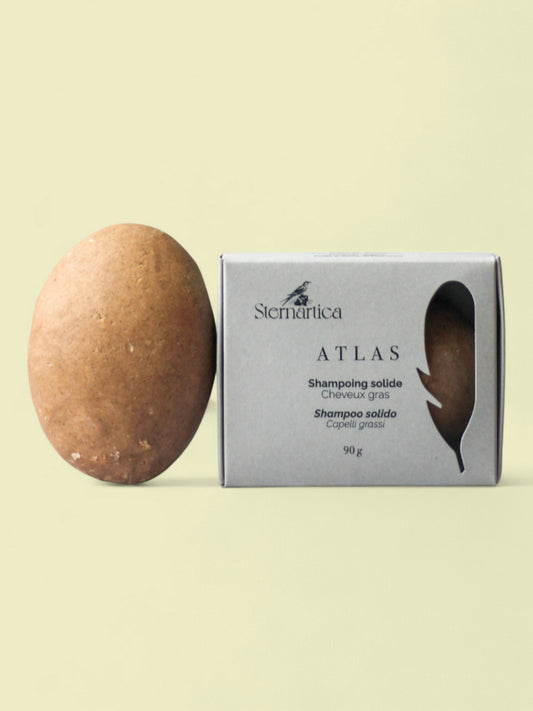
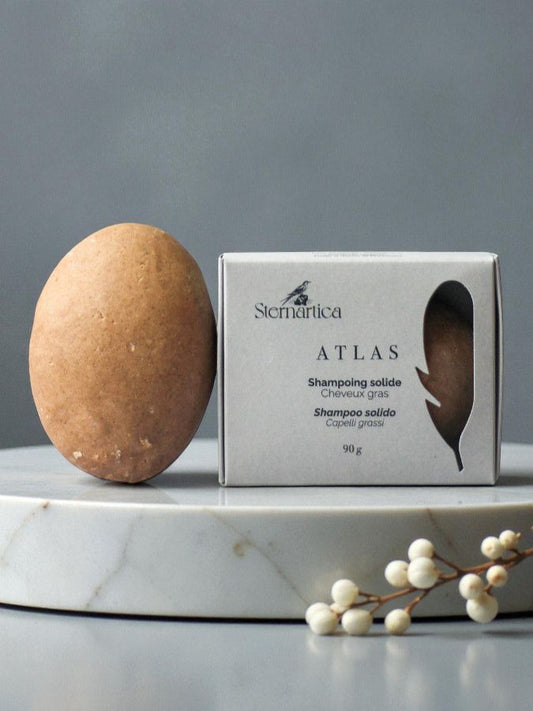
Solid shampoo for oily hair with ghassoul | Atlas
Regular price €14,90 EURRegular price -
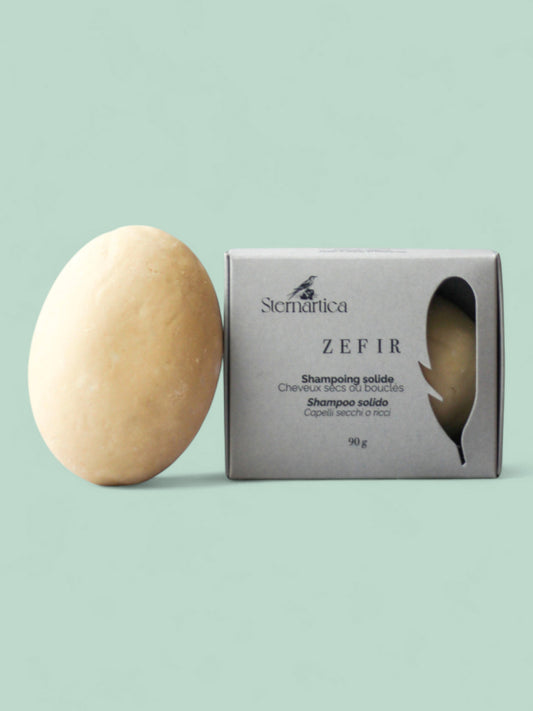
Solid Shampoo for dry & curly hair | Sulfate-free | ZEFIR
Regular price From €14,90 EURRegular price€44,70 EURSale price From €14,90 EURSale


Soap, or a real solid shampoo?
Most bars sold as solid shampoo are saponified soaps. Perfect for the body — but their pH, around 9, lifts the hair cuticle. That's where rough hair and that film that never quite rinses out come from. Hair itself lives around pH 5.
Look at the first ingredient on the INCI list:
Sodium Olivate · Sodium Cocoate · Sodium Palmate
Sodium Cocoyl Isethionate
All three of our bars start with Sodium Cocoyl Isethionate, a gentle coconut-derived surfactant — and none contains sulphates.
Which one is for your hair?
Three bars, three precise needs. We don't make twelve: we make three, and each answers a question you've already asked yourself in front of the mirror.
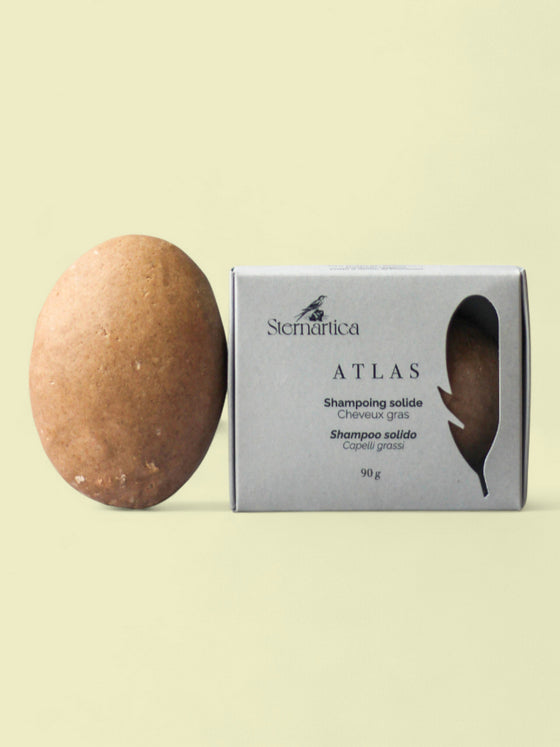
“My roots are greasy in 24 hours”
Atlas
Moroccan ghassoul and organic hazelnut oil: absorbs excess sebum without stripping, so you can wash less often.
Discover →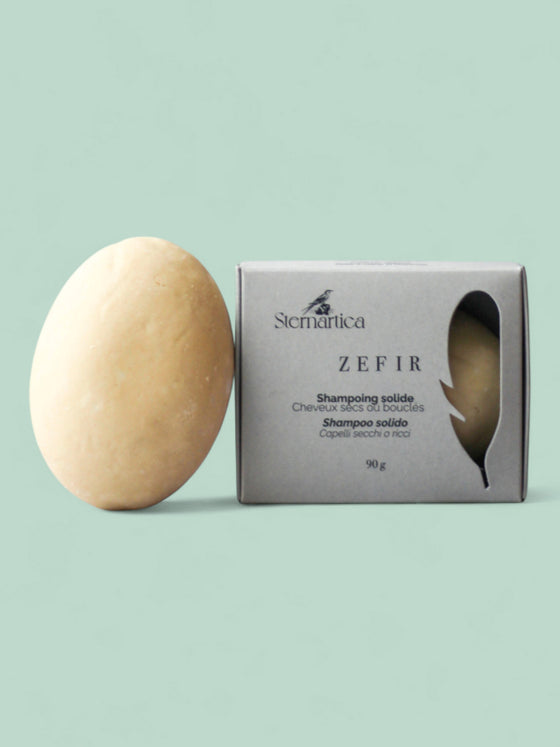
“My curls are dry and undefined”
Zéfir
Fair-trade jojoba oil and white clay: cleanses without weighing hair down and lets curls redefine themselves. The gentlest of the three.
Discover →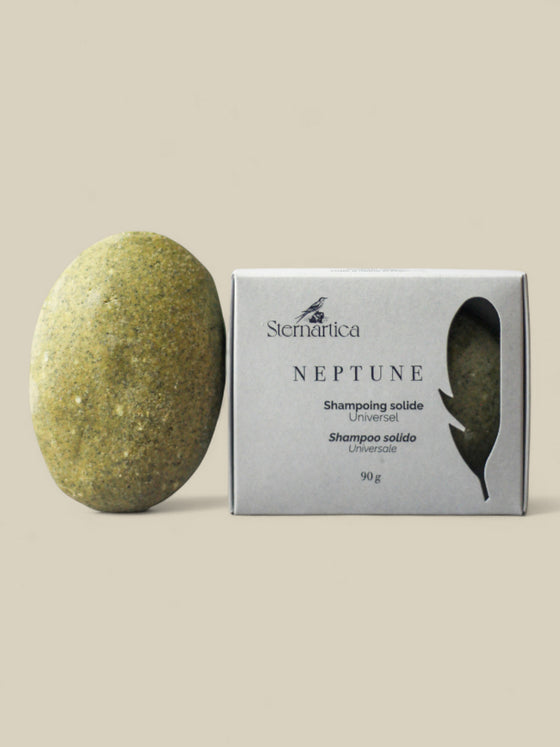
“I want one for the whole household”
Neptune
Spirulina, rice flour and organic olive oil: gentle, richly lathering, no specialisation. Suits the whole family.
Discover →What's actually inside
“Natural” means nothing legally. “Organic” is certified, and it can be counted. Here is the count, product by product.
| Neptune | Zéfir | Atlas | |
|---|---|---|---|
| Certified organic ingredients | 8 / 9 | 7 / 8 | 7 / 9 |
| Surfactant | Sodium cocoyl isethionate — sulphate-free, all three | ||
| Key active | Spirulina | Jojoba + white clay | Moroccan ghassoul |
| Scent | Clary sage, mandarin | Bergamot, cypress | Atlas cedar |
Each bar covers up to 60 washes — the equivalent of two to three 250 ml bottles — and leaves no plastic packaging behind.
The gesture that changes everything
Most disappointments start here, not with the formula: people rub the bar on their lengths instead of lathering it.
- Wet your hair thoroughly with warm water.
- Lather the bar between your hands, or run it directly over your scalp — never on the lengths.
- Massage your scalp for two minutes: that's where it all happens.
- Rinse thoroughly, warm water then cold.
Between showers, let the bar dry on a support that drains, out of the stream: this decides how long it lasts more than anything else. Avoid magnetic soap holders — the insert can split a shampoo bar, which is harder than a soap.

What you should get
The bar lathers between your hands in seconds. That's the lather you want before massaging your scalp — not a bar rubbed along the lengths.
If the lather doesn't come, there's no point insisting: it's almost always a sign that it isn't a shampoo but a soap.
“It takes three weeks to adjust” — no.
Everywhere you read that you must endure a transition period while your scalp rebalances. A properly formulated solid shampoo requires none. What people take for a transition is almost always a high-pH bar leaving a deposit at every wash. If your hair still feels unpleasant after three weeks, the problem isn't your scalp: it's the product.

Every bar is moulded by hand, one at a time.
No production line. I weigh the powders, mix the paste, press it into the mould and unmould every bar by hand, in my workshop in Drôme Provençale. It's slower — and it's what lets me work in short batches only, with no convenience preservatives and no formula frozen for a decade.

Federica
Founder & formulator
I mould every bar by hand in my workshop in Drôme Provençale, in small batches. If you're torn between two, write to me: I answer myself, and I'd rather tell you “take the other one” than sell you the wrong bar.
Frequently asked questions
The real ones, the questions people email me.