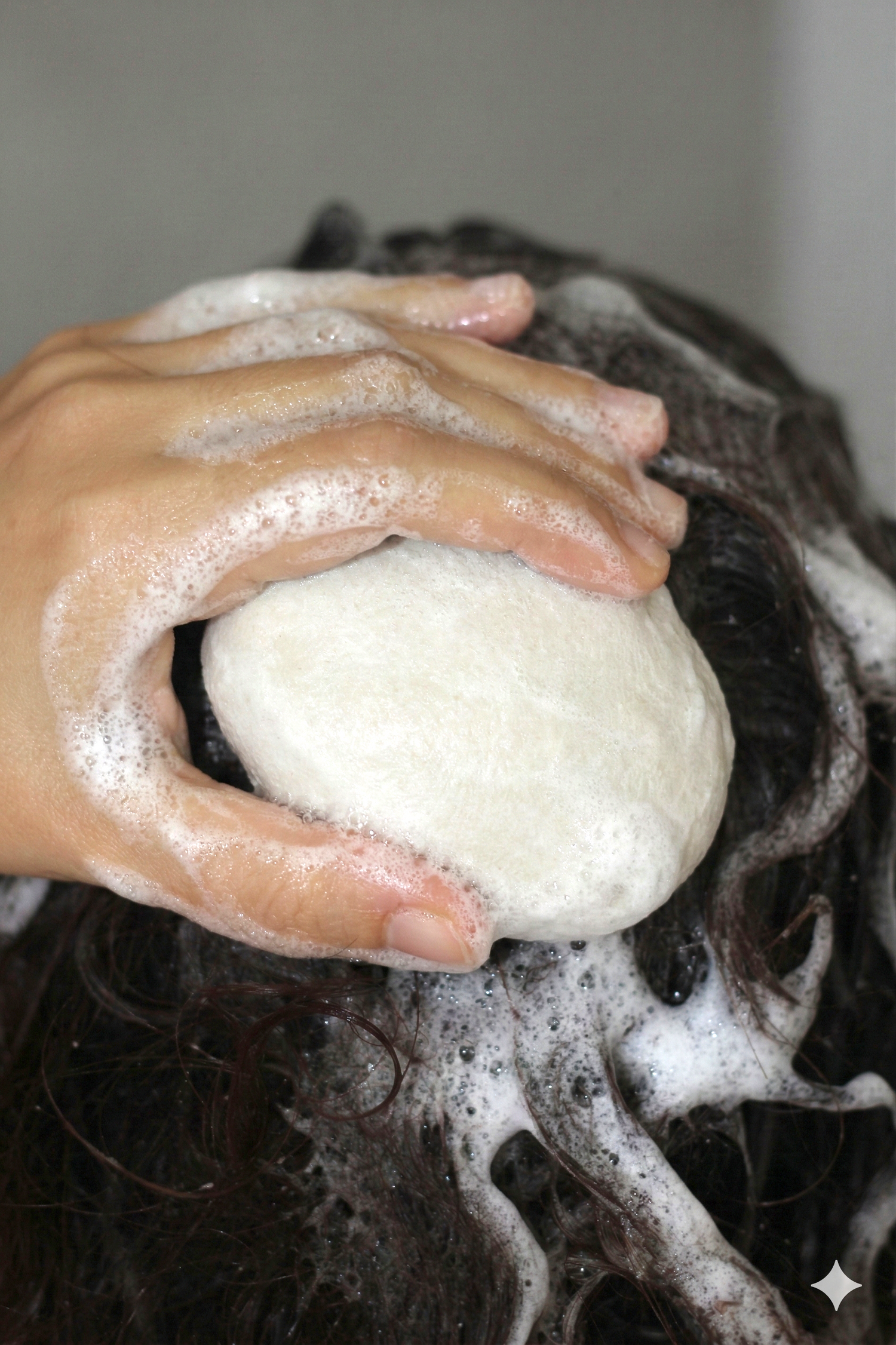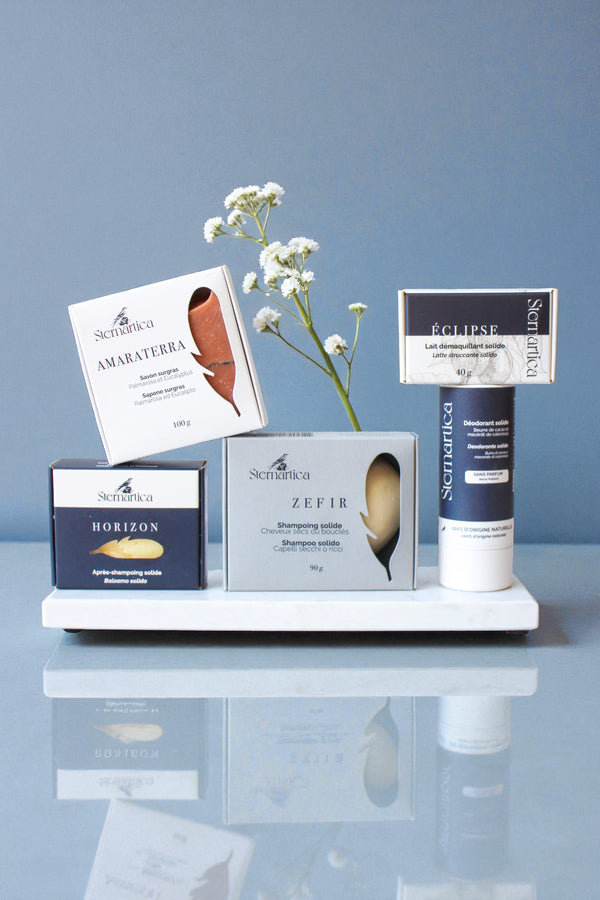

Curly hair is naturally more porous than straight hair, which makes it more vulnerable to sulfates (SLS, SLES). Those surfactants remove the lipids that hold a curl together, swell the cuticle and create frizz. A sulfate-free shampoo built on Sodium Cocoyl Isethionate (SCI) cleans without any of that, and it's the basis of Sternartica's ZEFIR formula.
Your curls look good, just not after washing. They come out flat and undefined, or the opposite, swollen and frizzy. You switch products, you try masks, you hunt for the right routine.
But have you looked at what's in your shampoo ?
Curly hair has a naturally more porous structure than straight hair, which makes it more vulnerable to harsh surfactants like sulfates. Sulfates (SLS, SLES) remove the natural lipids that hold a curl in shape, swell the cuticle and create the negative charges responsible for frizz. A sulfate-free shampoo built on Sodium Cocoyl Isethionate (SCI) cleans without any of that.
Why is curly hair different from straight hair?
A curl isn't just a shape, it's a whole hair architecture .
A curly hair has an elliptical cross section (rather than round like straight hair), with a helical twist that varies with the curl type. That structure creates natural weak points at every bend, where the cuticle is less well protected.
The direct consequence: curly hair is structurally more porous than straight hair. Its cuticle opens more easily, which lets itabsorb moisture quickly, but lose it just as quickly. Actives penetrate well, but protective lipids escape more easily.
That's why curly hair has specific needs that conventional shampoos don't cover.

What do sulfates do to curly hair?
They remove the lipids a curl needs
Sulfates, Sodium Lauryl Sulfate (SLS) and Sodium Laureth Sulfate (SLES), are anionic surfactants with strong detergent power.
They clean effectively, but along with impurities and excess sebum they also remove the intercellular lipids that keep the cuticle closed and the curl defined.
For curly hair, naturally drier and more porous, that loss of lipids is particularly damaging : without that natural protection the curl loses its shape, the lengths turn rough, and the scalp reacts by overproducing sebum to compensate.
They swell the cuticle and create frizz
Anionic surfactants like sulfates give hair a negative charge. Those electrostatic charges push the cuticle scales away from each other, and that's exactly the mechanism behind frizz.
This is well established in surfactant chemistry, and it's particularly visible on curly hair, whose cuticle is already less even than that of straight hair.
They disrupt hydration
Curly hair that loses its protective lipids no longer holds water. The lengths dry out, ends split, and the curl loosens. This is often experienced as "hair that doesn't like shampoo", when in fact the problem is the surfactant, not the format.

How to read the INCI list for a curl-friendly shampoo
The rule is the same as for any cosmetic: everything is in the first ingredients on the INCI list.